Now Assist and AI Agents: from assisting to acting in ServiceNow
Contenido
In a short time ServiceNow has gone from “generative AI assistant” to “agentic enterprise.” Two names capture that jump: Now Assist, the generative AI layer embedded in the platform, and AI Agents, which move from suggesting to acting. If you work with the platform, it’s worth being clear on what each one is and where one ends and the other begins.
What Now Assist is
Now Assist is the generative AI natively embedded in the ServiceNow AI Platform. It isn’t a separate product: it’s capabilities that show up inside the workflows you already use. The most common ones:
- Summaries: of incidents, cases, chat threads or changes, so you don’t read half a screen of history.
- Content generation: drafts of knowledge articles, replies and emails from a prompt.
- Code and flow generation: help writing scripts or designing automations.
- AI Search: LLM-powered search that returns answers with actionable summaries, not just a list of links.
- A more natural Virtual Agent: understands the user’s language and resolves or routes the request.
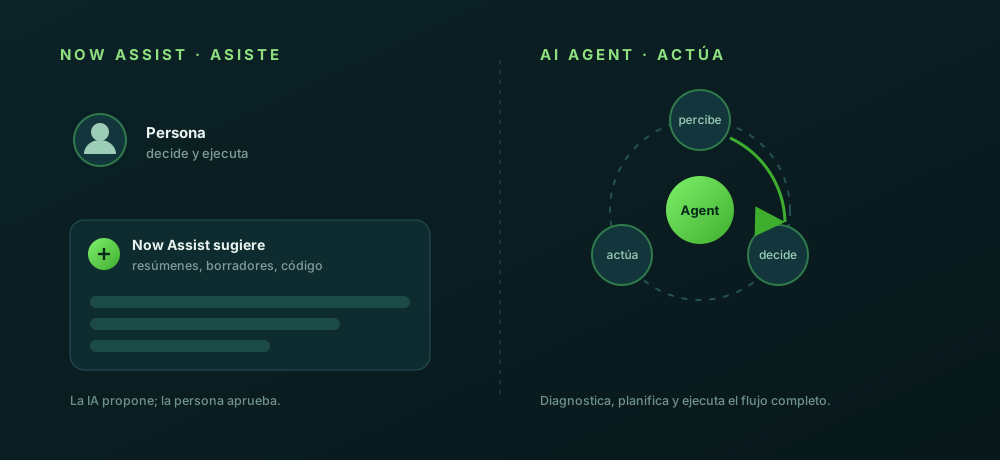
The underlying idea: the AI proposes, the person decides. It’s assistance.
From assisting to acting: AI Agents
This is the 2026 shift. An AI Agent doesn’t just suggest: it diagnoses, plans and executes multi-step workflows to reach a specific outcome, reasoning over your data and invoking tools along the way.
As ServiceNow’s leadership put it, “2026 is the year of agentic collaboration in the enterprise”: we stop asking AI for simple answers and start letting it diagnose, plan and execute multi-step workflows autonomously.
How they’re built: AI Agent Studio and Now Assist Skill Kit
Two tools concentrate the building:
- AI Agent Studio: where you define agents, agentic workflows and their tools using natural language. You describe what the agent should do, set guardrails, and deploy it. The agent uses tools —flow actions, subflows, scripts and skills— to carry out its tasks.
- Now Assist Skill Kit (NASK): to build skills and assistive agents that automatically generate content and outputs, saving time and reducing errors.
The key point for admins: an agent is only as good as its tools, its data and its guardrails. It’s not magic; it’s governed orchestration over what you already have on the platform.
The autonomous workforce of specialists
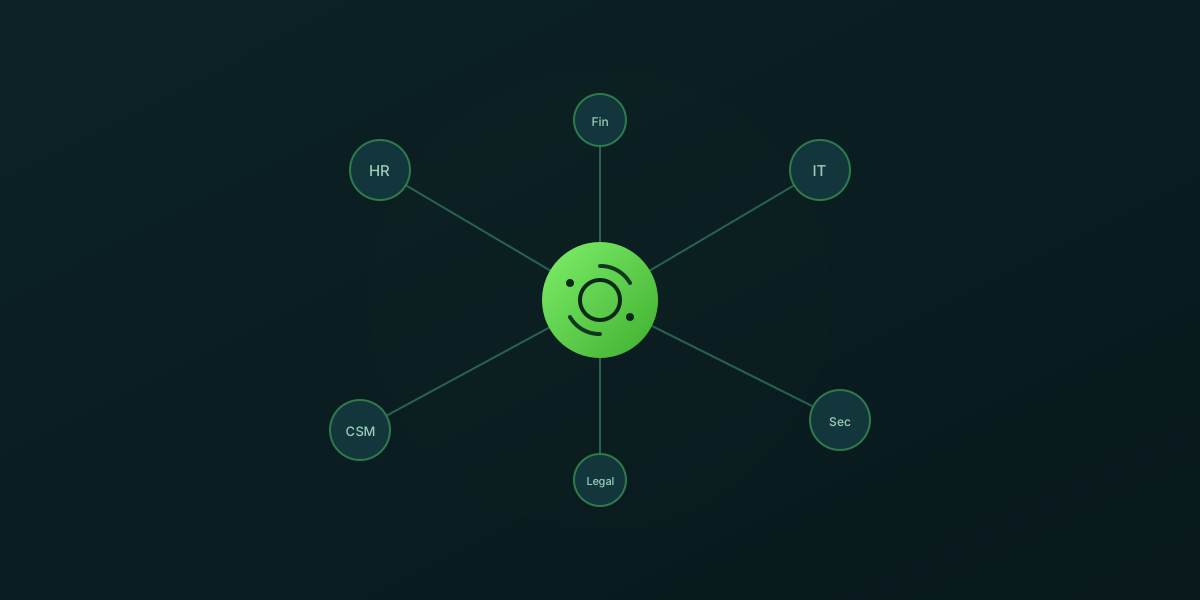
ServiceNow groups these agents into an Autonomous Workforce: a set of AI “specialists” that don’t just assist but complete processes end to end. They span IT, CRM/customer service, HR, finance, legal, procurement and security/risk.
The eye-opening figure? ServiceNow says its internal AI specialist resolves service-desk cases 99% faster than a human agent. With the usual caution around vendor numbers, it signals the direction of travel.
Governance: what you can’t ignore
The more autonomy, the more control matters. Two fronts:
- Governed by default: agentic capabilities are designed with guardrails and control from the start (for example, the Build Agent for development works inside AI coding tools, governed by default).
- Consumption-based licensing: the AI-native model is metered in assists / consumption. Before scaling agents, understand what counts as consumption and put limits and metering in place, or the bill surprises you.
What it means for you
If you administer or build on ServiceNow, the mental map is simple:
| Now Assist | AI Agents | |
|---|---|---|
| What it does | Suggests (summaries, content, code) | Executes full workflows |
| Who decides | The person | The agent, with guardrails |
| Where it’s built | Enable and tune skills | AI Agent Studio + NASK |
| Risk to watch | Output quality | Autonomy, data, consumption |
The practical advice: start with Now Assist on scoped cases (summaries, knowledge), measure quality and adoption, and only then move to agents for repetitive, well-defined processes —with clear tools, clean data and guardrails from day one.
Sources
- Generative AI — ServiceNow
- AI Agents — ServiceNow
- Create your first Assistive AI Agent with the Now Assist Skill Kit — ServiceNow Community
- ServiceNow unveils an autonomous AI workforce (Knowledge 2026) — Fortune
ServiceNow, Now Assist and AI Agent Studio are trademarks of ServiceNow, Inc. This is an independent analysis.